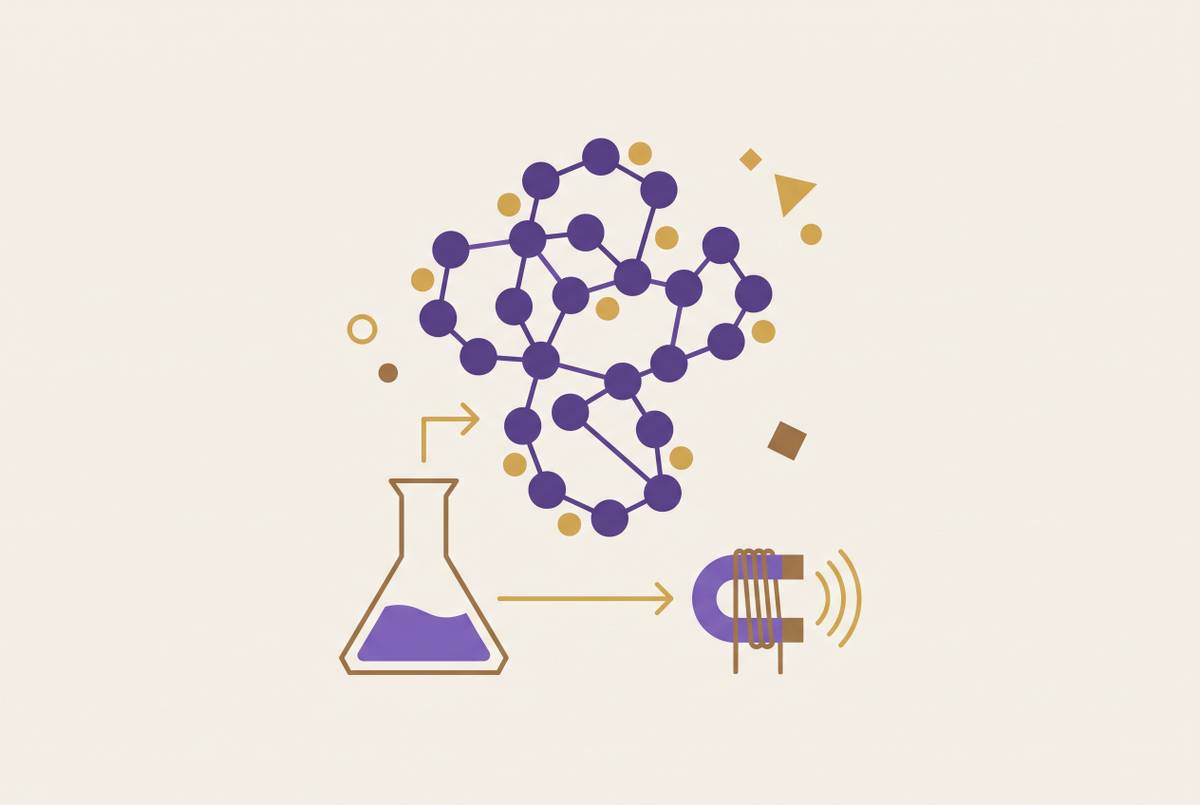
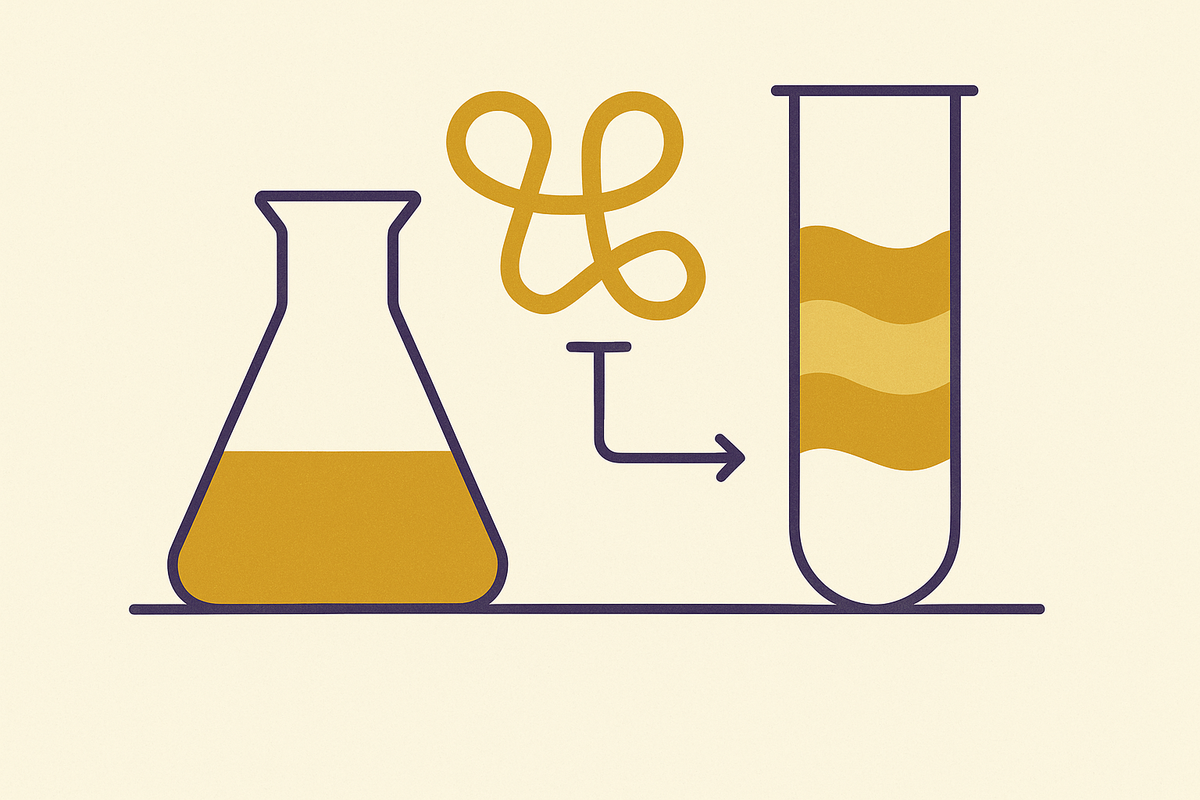
SPR and Biophysical Assay Protein Preparation Using CFPS
Cell-free protein synthesis enables direct SPR analysis of difficult-to-express proteins.

Surface plasmon resonance is still the biophysical gold standard, because it can analyze how two biomolecules bind one another in real time, without labels. The method detects minute shifts in refractive index at a metal-dielectric interface as an analyte binds a ligand immobilized on that surface, so any contaminant or stray background signal that disturbs the interface corrupts the resulting kinetic trace. Getting an accurate KD or a reliable set of kinetic constants depends on the protein being conformationally intact, sitting in a defined modification state, and free of aggregates or competing binders in solution. A partially misfolded preparation does not produce a wrong KD; it produces a number with no meaning attached to it, because the instrument cannot distinguish a genuine binding event from the noise of a protein that never folded correctly. SPR assays also consume very little material, often microgram quantities per run, which reframes the production task: generate a small amount of exactly the right protein, with confidence in what that protein actually is. That confidence depends on controlling what else sits in the sample besides the target. The sensor surface has to separate specific binding from matrix noise, so the composition of the solution surrounding the protein carries as much weight in the final data as the protein's own identity and folding state.
Why conventional cell-based expression struggles with assay-critical proteins
Cell-based expression systems were built and refined for a different purpose: producing large quantities of protein reliably, not meeting the narrow quality profile that SPR and related biophysical assays require. Getting from a construct to a tested protein in a cell-based system runs through vector construction, transformation, colony selection, culture optimization, and multiple rounds of chromatographic purification, with each step representing both a bottleneck and a point where the whole effort can fail. You can wait weeks before you even get to test whether the protein works. Toxicity poses a harder limit still: proteins that disrupt membranes, activate host proteases, or interfere with cellular metabolism kill the host cell before enough protein accumulates, a biological problem that no amount of workflow optimization fixes. Membrane proteins and GPCRs illustrate this mismatch sharply. They are paradigmatic SPR targets because SPR needs so little protein to deliver accurate affinity and kinetic data, yet they are notoriously resistant to cell-based expression, since you cannot adjust the membrane environment inside a host cell the way you can adjust conditions in an in vitro reaction. Post-translational modification state compounds the problem: the host organism determines how a protein gets modified, and for biophysical assays where modification state governs binding behavior, that lack of control becomes a reproducibility problem. None of this describes a narrow set of edge cases. Antibody fragments, GPCRs, antimicrobial peptides, and multi-domain constructs rank among the most consequential targets in early drug discovery, and they are disproportionately difficult to express in cells.
How CFPS is structurally configured to address those mismatches
Cell-free protein synthesis extracts the transcription-translation machinery, ribosomes, translation factors, tRNAs, from its cellular confines and runs protein production as an in vitro reaction. Protein synthesis is decoupled from cell growth and cell viability, and that decoupling, not raw speed, is what gives CFPS its advantage over cell-based systems for assay prep. Because no living cell needs to survive the reaction, toxic proteins present no production barrier at all: the system does not collapse before useful yield is reached. The reaction environment is also open and directly tunable. Chaperones, disulfide isomerases, redox conditions, and membrane mimetics can all be added at defined concentrations, giving the experimenter control over the folding environment that a living host cell simply cannot offer. That control has been demonstrated concretely: solubility of scFv antibody fragments expressed in E. coli cell-free lysate improved substantially with the addition of defined concentrations of DsbC and DnaK chaperones, and CFPS, including a modified two-stage refolding protocol, cut the overall production-to-functional-protein timeline from four days to two. CFPS reactions can also run directly from linear DNA templates generated by PCR, bypassing cloning in many workflows. This is a structural shift, not a minor convenience, because it means a variant can move from sequence to expressed protein in hours instead of weeks. CFPS has two platform architectures, and the distinction between them matters directly for what happens downstream at the SPR stage. Crude lysate systems, built from E. coli, CHO, wheat germ, or Pichia pastoris extracts, carry contaminating nucleases and proteases, undefined ratios of components, and batch-to-batch variability, all real liabilities in an assay where background signal is what decides whether the data means anything. Reconstituted systems use only defined, purified components, which eliminates that undefined background and improves reproducibility, at the cost of greater complexity and expense to assemble. The choice between the two directly affects whether the SPR data generated downstream will be interpretable.
Direct injection of CFPS supernatants into SPR: how capture chemistries solve the matrix problem
Modern SPR surface-capture chemistries let the sensor chip perform the selectivity work that a separate purification step would otherwise have to do, and that capability makes direct injection of crude CFPS supernatants into SPR a validated and reproducible approach. Capture molecules immobilized on the sensor surface, anti-His antibodies, Protein A, streptavidin, selectively pull the tagged, newly synthesized protein out of the crude supernatant, and the complex background of the cell-free extract washes away before the target antigen ever gets introduced. The capture step functions as an in-line affinity purification built into the assay itself, so the antigen encounters only the captured protein and not the surrounding matrix. The evidence for this approach is specific and reproducible. A 2026 study published via ScienceDirect used CFPS to prepare the CXCR4 transmembrane protein carrying an affinity tag, identified a nickel-chelating biosensor modified with carboxymethylated dextran as the optimal coupling strategy, and then applied that CMD-NTA/SPR biosensor to screen CXCR4 ligands drawn from 96 natural products, demonstrating in-situ purification and immobilization of a transmembrane protein in a single step. Stech et al. expressed full-length IgG and scFv-Fc using a microsome-containing CHO-based cell-free system and validated the products by SPR; the analysis confirmed conformational integrity and specific, concentration-dependent binding, with a KD of 1.7 µM measured for the IgG, establishing functional viability for downstream kinetic characterization. The underlying concern about matrix interference, that background from the cell-free extract would compromise SPR sensitivity, has an empirical answer in these results: the capture-wash-inject sequence resolves it.
Difficult proteins: membrane proteins, toxic constructs, and antibody fragments as the highest-value CFPS-SPR targets
The proteins most likely to defeat cell-based expression tend to be the ones where SPR's low consumption and label-free format help the most, so CFPS and SPR end up a matched pair for this class of targets, not a convenient coincidence. GPCRs sit at the center of this overlap. SPR is one of the primary biophysical methods used for GPCR fragment screening, because it needs so little protein and carries no label, and an entire SPR fragment screening project can need as little as 25 to 100 micrograms of protein, a quantity well within reach of CFPS's milligram-scale output. The CXCR4 case demonstrates the full workflow end to end: CFPS prepares the protein, the SPR surface captures and immobilizes it, and the system screens a compound library, with no separate purification run required anywhere in the sequence. Combining CFPS with SPR in this way allows in-situ purification and immobilization of the target protein in a single step, improving the efficiency of the entire workflow. Toxic proteins present a different but related advantage. Antimicrobial peptides, pore-forming proteins, and proteases are inherently harmful to host cells, and cell-based expression of these targets fails because the protein kills the host before useful yield accumulates. CFPS removes that constraint entirely, since there is no living cell to protect. For SPR purposes, if production is toxicity-free, these proteins can be characterized biophysically for the first time in many cases; without CFPS, some targets cannot be made in the quantity and quality a kinetic assay requires. Antibody fragments round out this category. Solubility is the primary bottleneck for scFvs produced in cell-based systems, and CFPS addresses it by allowing direct addition of chaperones such as DsbC and DnaK at defined concentrations, with a modified two-stage refolding protocol cutting production-to-functional-protein time from four days to two. The 200-variant VHH screening case demonstrates that CFPS-synthesized antibody fragments come out conformationally intact and produce kinetic data statistically equivalent to their cell-expressed counterparts. AI-generative design tools can now produce hundreds to thousands of candidate binders in silico within minutes, so the bottleneck has moved downstream into wet-lab validation. CFPS paired with direct-injection SPR is the workflow built to absorb that volume.
Throughput, parallelization, and plate-based automation in the CFPS-SPR pipeline
CFPS's compatibility with standard plate formats and liquid-handling automation turns the path from synthesis to SPR into a parallelized screening pipeline. High-throughput CFPS workflows run in 96-, 384-, and 1536-well plate formats alongside robotic liquid handling, allowing consistent low-volume dispensing across large numbers of variants at once. Fully automated versions of this workflow already operate: the Protein Production Sweden service at the University of Gothenburg uses an Opentrons OT-2 liquid-handling robot to assemble CFPS reactions in plate-based format, supporting anywhere from a single construct up to 96 unique reactions in parallel, with purified protein available in four hours or less. The VHH screening case offers the clearest illustration of what this throughput means in practice: 200 variants synthesized in three hours, all 200 screened by SPR in 4.5 hours, a full synthesis-to-kinetics cycle completed within a single working day. Machine-learning-guided variant screening shows where the scale ceiling sits. A library of 1,217 enzyme variants was expressed using CFPS and screened across 10,953 individual reactions, a volume that would be operationally impossible on any reasonable timeline with cell-based expression. Because CFPS reactions run directly from linear, PCR-amplified DNA, a variant library can be expanded or redirected between cycles without touching a cloning step, which keeps the iteration loop tight. Throughput on the synthesis side only pays off if the SPR side can absorb it, and the tag-capture direct-injection approach is what makes that possible: variants move from synthesis to kinetic data without queuing for a separate purification run that would reintroduce the very bottleneck the throughput was meant to eliminate. OpenCFPS™ from Sepia Biosciences is built for compatibility with standard plate formats, automation systems, and incubators from the outset, rather than requiring custom integration or specialist infrastructure, which makes it a practical starting point for a lab assembling a CFPS-SPR pipeline.
Reagent quality and lot-to-lot consistency in the upstream prep
Reproducibility in CFPS-derived SPR data comes down to how the reagent is designed. The honest objection to crude lysate CFPS deserves to be stated directly: extract-to-extract differences, undefined ratios between components, contaminating nucleases and proteases, and batch inconsistencies are documented and real, not cosmetic concerns that disappear under closer inspection. The structural answer lies in defined-component or well-characterized lysate systems built on published formulations, which remove the undefined variables, combined with lot-level QC data that closes the gap between batches. What cannot be measured cannot be standardized. Cost has historically been the largest practical barrier to CFPS adoption, and two 2026 publications show that barrier shifting. Olsen et al., writing in Nature Communications in 2026, screened more than a thousand reagent formulations and identified a simple, reproducible twelve-component system that achieved substantially higher protein yields at both small and larger scales, with an average cost reduction of roughly 95% compared to earlier cell-free reagent formulations. Wu et al., in Biotechnology and Bioengineering, report an optimized Pichia pastoris CFPS system built around a modified Kozak sequence and defined additives that achieved a ten-fold increase in protein yield while cutting the cost per gram of protein by roughly 89%. For SPR work, you need so little protein per assay that CFPS reagent cost per experiment is already favorable, and the economics make the strongest case precisely in this assay prep context, where consumption is measured in micrograms. OpenCFPS™ from Sepia Biosciences addresses reproducibility through design choices that matter directly for assay prep: documented formulations, lot-level QC data published openly, and pricing as low as $25/mL, giving labs the transparency to troubleshoot and standardize the reagent. Lot-level QC data is not an optional extra for reproducible kinetic assays. If the reagent changes between lots and the data changes with it, the comparison between runs stops being valid, so openly published QC data lets you audit that consistency.
Practical considerations for setting up a CFPS-to-SPR workflow in a standard lab
A CFPS-to-SPR workflow does not require infrastructure beyond what most protein labs already operate. The decisions that matter are reagent selection, tag strategy, and surface chemistry, not equipment investment. Reagent system selection comes first. For targets where background contamination threatens a clean kinetic baseline, defined-component or well-characterized, documented-formulation lysate systems reduce the undefined variables that complicate interpretation. For high-throughput variant screening, where the SPR capture step itself handles selectivity, optimized crude lysate systems offer practicality and established throughput performance. OpenCFPS™ is built for both modes, rapid screening of large variant libraries and milligram-scale production alike, and its openly documented formulations and lot-level QC data make it a reasonable starting point if you need to standardize across both use cases. Tag strategy determines surface chemistry compatibility downstream. His-tag capture using NiNTA or CMD-NTA chemistry is the most validated approach for direct CFPS supernatant injection, demonstrated in both the CXCR4 and VHH screening cases. Protein A capture supports Fc-fusion and IgG formats, as shown in SMAD2-P IgG SPR validation work. For membrane proteins specifically, tag placement is not automatic: the CXCR4 case established its affinity-tag position and biosensor surface modification empirically, through testing rather than by default assumption, and labs working with similar targets should expect to run that same optimization themselves. You also need to tune the detergent and lipid environment inside the CFPS reaction for membrane proteins, and because the reaction is open, you can titrate those additives directly rather than leave them to whatever the host cell happens to provide. Plate format and automation readiness round out the setup. Ninety-six-well plates paired with robotic liquid handling are the established configuration for the throughput levels these cases demonstrate, and OpenCFPS™ is designed to slot into standard plate formats and automation systems without custom integration work. Before you run any SPR injection, run a brief SDS-PAGE or dot-blot check to confirm the target protein appears at the expected size, so you don't waste instrument time on a sample that was never going to work. For labs still hesitant to skip a purification step entirely, the staphylokinase variant screening reported by Tomková et al. Tomková et al., in FEBS Open Bio, offer a concrete precedent: functional activity rankings generated from crude CFPS mixtures closely matched those obtained from purified proteins, showing that for many targets, the direct-injection approach delivers reliable functional readouts without a purification step standing between synthesis and data.