Linear DNA Templates Versus Plasmid in High-Throughput CFPS Screens
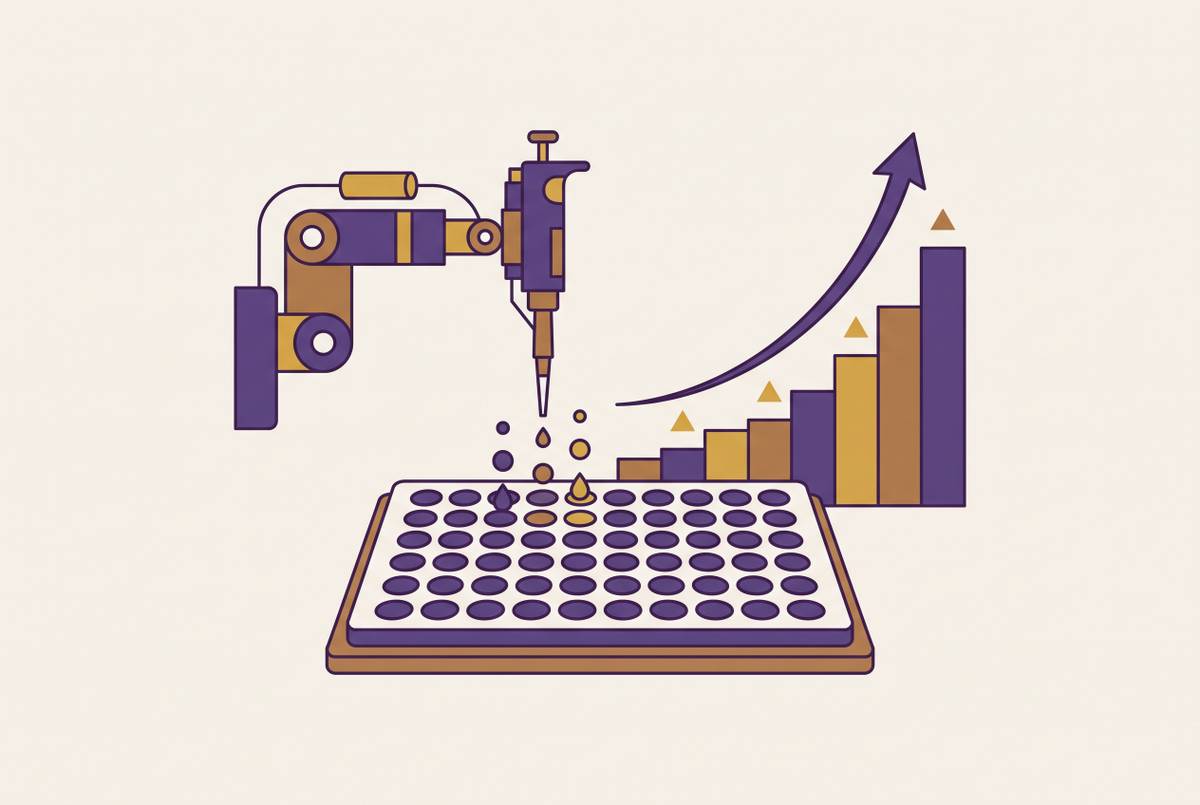
Linear templates cut screening timelines from days to hours by skipping plasmid preparation.
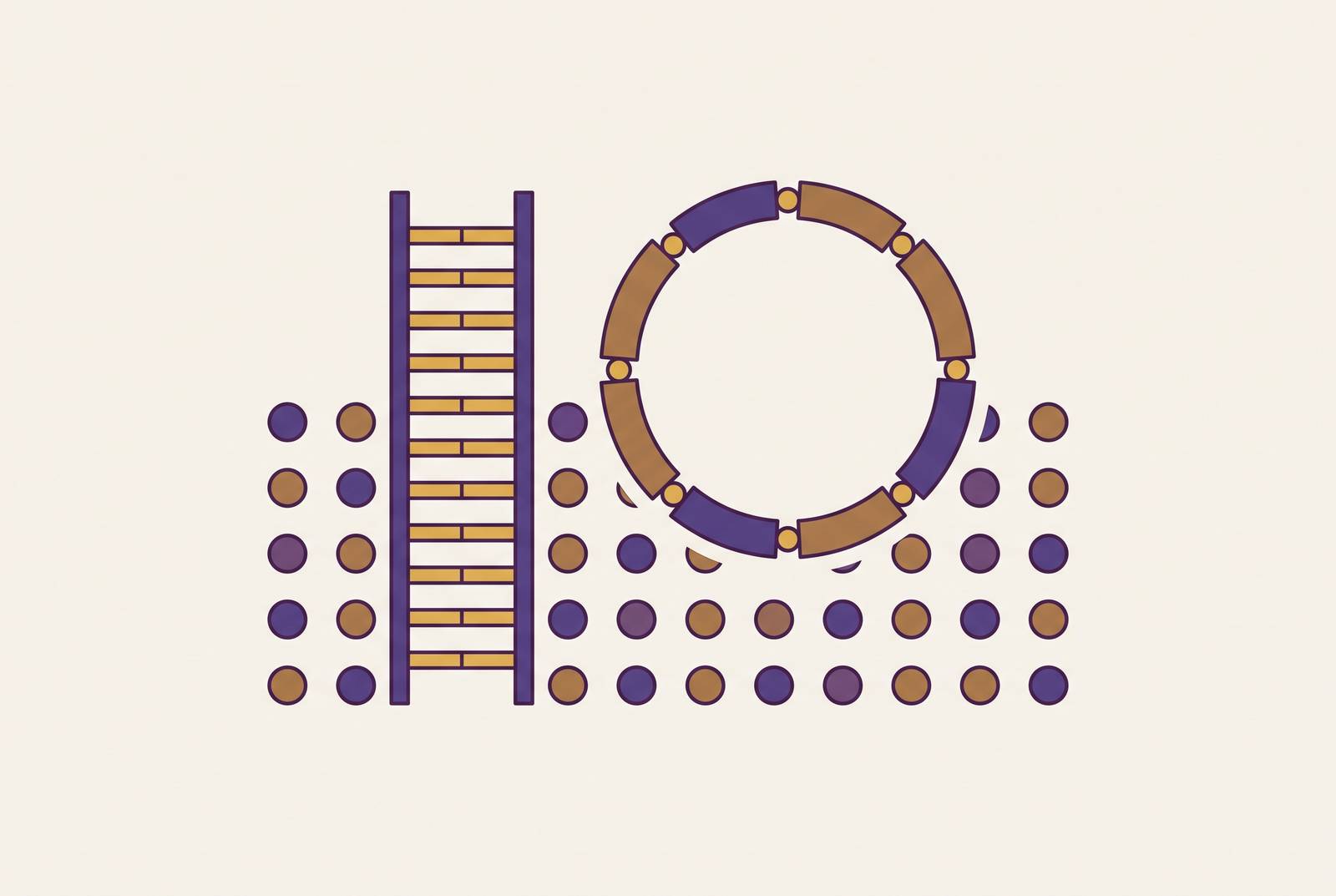
Cell-free protein synthesis skips the parts of biology that make cell-based expression slow: no transformation, no colony picking, no waiting for an organism to decide it wants to grow. The question that matters once a lab commits to CFPS is narrower: should the DNA feeding the reaction be a plasmid or a linear PCR product? Most labs still default to plasmid out of habit, and that default is wrong for the stage where it costs them the most: early screening. The right answer depends on which stage of a campaign a lab is running."
CFPS happens in an open system, outside a living cell, with no membrane and no viability constraint to protect. That openness lets a researcher add, remove, or swap a reaction component directly and watch what happens, something no living cell tolerates gracefully. Coupled transcription-translation systems have become a widely adopted CFPS format, largely because they fold two biological steps into one reaction and take either plasmid or linear DNA without complaint. High-throughput screening is where the template decision starts to bite, because the number of variants a team can push through in a week gets capped by whichever step in the pipeline is slowest. The bottleneck is what happens before the reaction ever starts, almost never the cell-free reaction itself. It's what happens before the reaction ever starts.
What plasmid templates cost a high-throughput screen in time and labor
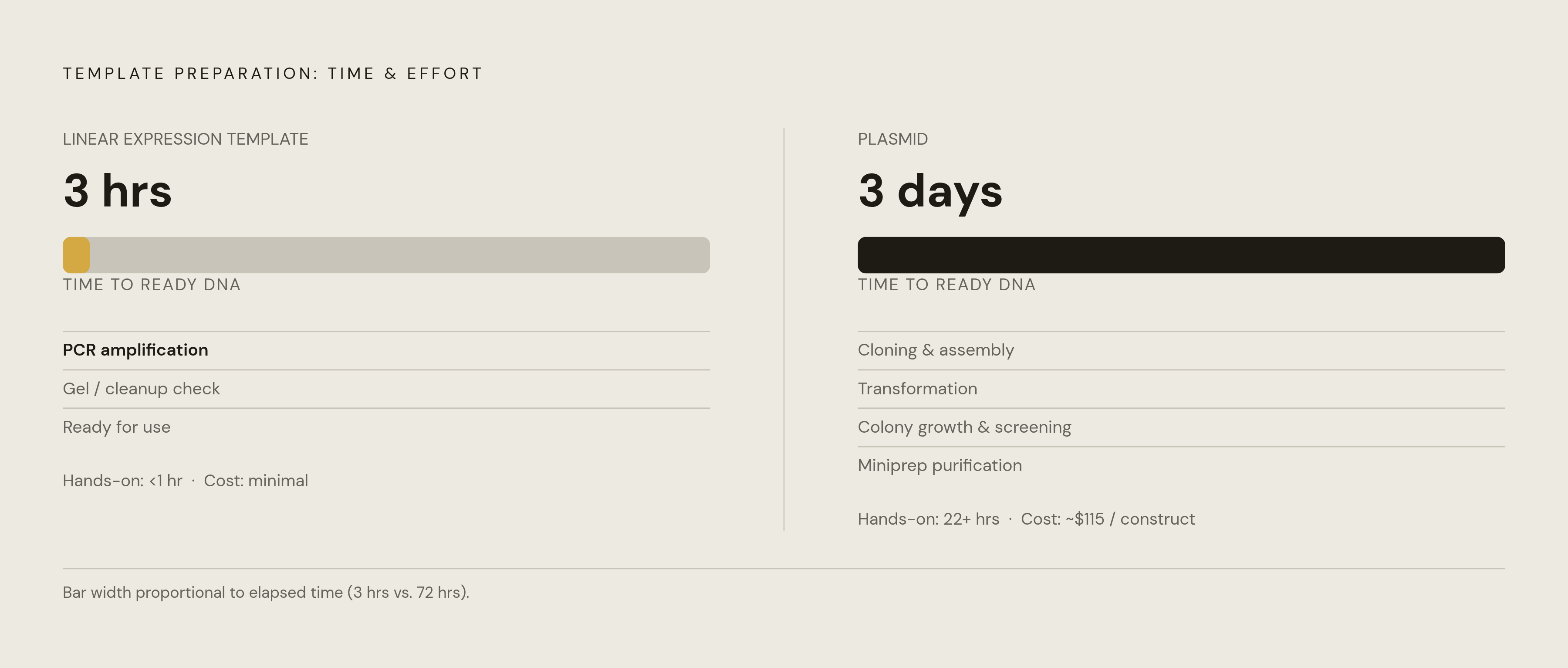
Plasmid preparation has a fixed floor, and that floor is set by biology, not by lab skill. Cloning, transformation, colony growth, and purification take a minimum of three days, because bacteria need time to divide and amplify the construct. A linear expression template can go from PCR machine to usable DNA in about three hours. That gap, three hours against three days, exists before either template ever touches a cell-free reaction.
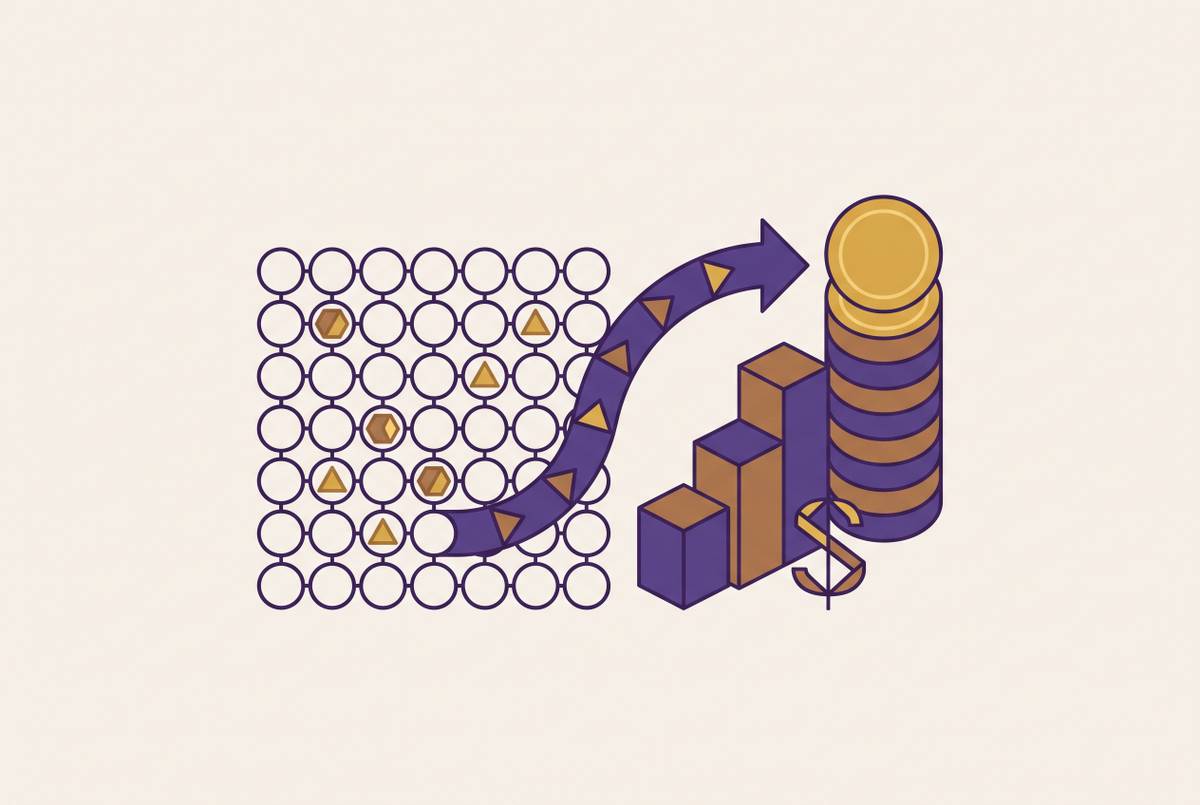
Labor cost stacks on top of the time cost. A 2023 Addgene blog post put the hands-on bench time for a single simple-insertion plasmid at about five hours, and most respondents in Addgene's 2018 and 2023 polls reported spending more than 22 hours per plasmid once queuing, incubation, and verification get counted, the better part of four working days. The same post priced consumables at roughly $115 per plasmid, before restriction enzymes or vector purchases push the real number higher. Run that math against even a modest screening library, a few dozen constructs, and plasmid prep alone turns into a weeks-long, high-cost phase that happens entirely before a single CFPS reaction runs.
Published analysis has found fragment-based, linear-template CFPS at least 50% faster in total cycle time than either plasmid-based CFPS or plasmid-based E. coli expression, with fewer discrete labor steps along the way. The same point applies more broadly: circular templates can significantly prolong the time needed to run cell-free protein expression, especially during the screening and optimization phase, when a lab wants answers fast and in volume. The bottleneck is the plasmid sitting upstream of the reaction, not the reaction itself. It's the plasmid sitting upstream of it.
Where the preparation advantage of linear DNA templates comes from
Linear expression templates, LETs, come out of PCR, and PCR doesn't care about colony growth, transformation efficiency, or overnight incubation. A researcher designs a sequence, orders or assembles primers, runs the amplification, and has usable template in hours. There's no cloning step, no transformation step, no plasmid extraction step. The entire pipeline plasmids require simply doesn't exist for LETs.
PCR also solves a problem that has nothing to do with speed. Amplification pushes template concentration up fast, and because the DNA never passes through a living cell to get made, LETs dodge the in vivo toxicity that kills attempts to clone genes for difficult, unstable, or actively toxic proteins. Cell-based expression needs circular DNA. Putting a linear template into a living cell causes it to be degraded or lost before it can express reliably, a constraint that has nothing to do with skill and everything to do with how bacterial repair machinery treats free DNA ends. CFPS sidesteps that constraint entirely, simply by not being a cell.
The payoff for a screening campaign is concrete. A design finished in the morning can be amplified by PCR and running in a plate-based CFPS reaction by afternoon, sequence to functional data in a single working day. LETs drop straight into standard plate infrastructure, and a sequence can carry whatever UTRs, T7 RNAP promoter, optimized ribosome binding site, and terminator the design calls for, tested directly with no cloning detour in between. Cloning and verifying even a handful of plasmid constructs in that same window takes days longer. At this stage, that throughput gap is the whole story.
Why exonuclease degradation is the central technical obstacle for LETs
None of that speed matters if the DNA doesn't survive long enough to get transcribed. Most CFPS protocols still default to plasmid for one specific reason: plasmids hold up better once they hit crude lysate, and that stability raises expression yield directly. The cause is exonuclease activity native to the extract, and one enzyme does most of the damage.
Exonuclease V, encoded on the recBCD operon, drives most LET degradation, and Fochtman and Oza, writing in Methods and Protocols in 2023, found it remains a problem even in extracts engineered to run low on nuclease activity overall. Researchers have reported linear templates degrading completely in crude bacterial lysate within minutes of a reaction starting, fast enough that transcription barely gets a foothold before the template it's reading disappears.
The irony cuts deep for anyone trying to run a cost-effective screen. Crude E. coli lysate is the cheapest and most widely used CFPS format on the market, and it's exactly the format where native nucleases chew through unprotected LETs fastest. Without some form of intervention, the yield gap between plasmid and unprotected linear DNA in this system runs wide enough to make LETs unreliable for quantitative screening. A screen that can't produce consistent, comparable yield across variants isn't measuring anything, so it's just generating noise. Solving degradation is a core requirement, not an optional refinement. It's the condition that decides whether LETs can be used.
LET protection strategies and their practical trade-offs
Three approaches have emerged to keep linear templates alive long enough to be useful: adding exonuclease inhibitors to the reaction, chemically modifying the DNA ends, or switching to lysate from exonuclease-deficient strains. None of them comes free.
Inhibitor supplementation is the most developed path. GamS is the most widely adopted inhibitor and now ships commercially as a companion reagent alongside CFPS kits. The Ku70/80 heterodimer is also available commercially, Chi-site DNA can be built directly into a construct during synthesis, and small-molecule inhibitors remain a less accessible option of the group. Performance is anything but uniform, though. A study in ACS Synthetic Biology found that in E. coli lysate, GamS and Tus didn't just protect the template, they pushed expression past plasmid-level yield outright, GamS by 143% and Tus by 156%. Switch the lysate to V. natriegens and the picture flips: GamS gave substantially reduced protection, while Tus kept working, taking LET expression to 164% above plasmid in that system. Fochtman and Oza's earlier review put GamS protection at only 35 to 50% relative to plasmid controls, a gap wide enough to make one thing clear: inhibitor performance isn't a fixed property of the molecule, it depends on which lysate and which template are actually in the tube. There is no universal winner here. The inhibitor has to match the system.
Chemical end-modification takes a different route, changing the template rather than the reaction environment. Methylating the template with dam methyltransferase produced a 32% increase in protein yield in E. coli extracts, while CpG methyltransferase methylation cut yield by 18% in the same type of system, an opposite effect from a superficially similar tool. These modifications add prep steps and cost, eating into the speed advantage that made LETs attractive to begin with, and end-modification alone has generally not been shown to reach plasmid-level expression without pairing with another protection method.
The third approach skips the chemistry and removes the enzyme responsible for the damage. Cell extracts from an E. coli BL21 Rosetta2 strain with the recBCD operon knocked out (ΔrecBCD) leave linear templates intact with no end-modification required, and this method has reached protein expression levels comparable to plasmid DNA in E. A study indexed on PubMed (PMID 36036615) reports coli CFPS reaching this level. The trade-off doesn't disappear, it just moves: a lab now has to maintain and prepare a specialized strain, which adds its own upstream burden, but stops paying an inhibitor cost on every single reaction. Across all three strategies, the destination is the same: effective LET protection brings linear-template yield up to match plasmid, and Fochtman and Oza's review frames that outcome as what makes fast design-build-test-learn cycles possible for synthetic biology generally.
When protected LETs can outperform plasmid outright
Matching plasmid yield turns out to understate what protected LETs can do. Research into optimized linear DNA templates has described a two-step PCR method for generating constructs that beat traditional plasmid templates by 60% in the systems tested.
The same patent describes a yeast-based CFPS comparison across three template forms: PCR-amplified DNA from a plasmid, assembled linear DNA, and circular plasmid itself. All three synthesized luciferase successfully, but the linear templates came out roughly 40 to 60% ahead of plasmid. Why linear templates would beat the format long treated as the gold standard isn't settled. Template copy-number dynamics and transcription factor access on a linearized construct are plausible mechanisms, but the question stays open rather than closed, and it should be treated that way rather than papered over with a tidy explanation.
What the finding does establish, even without a settled mechanism, is that the old shorthand, plasmid for yield, linear for speed, doesn't survive contact with the data. With the right design and the right protection strategy, a linear template can be the faster option and the higher-yielding one at once. That result holds in specific systems rather than as a general law, so a screening strategy should test for it as an upside rather than build a whole campaign on the assumption.
Mapping template choice onto the stages of a screening campaign
None of this adds up to "always use LETs" or "always use plasmid." It adds up to a decision that should track the stage of the campaign, and treating either template as a default for every stage is where labs waste the most time.
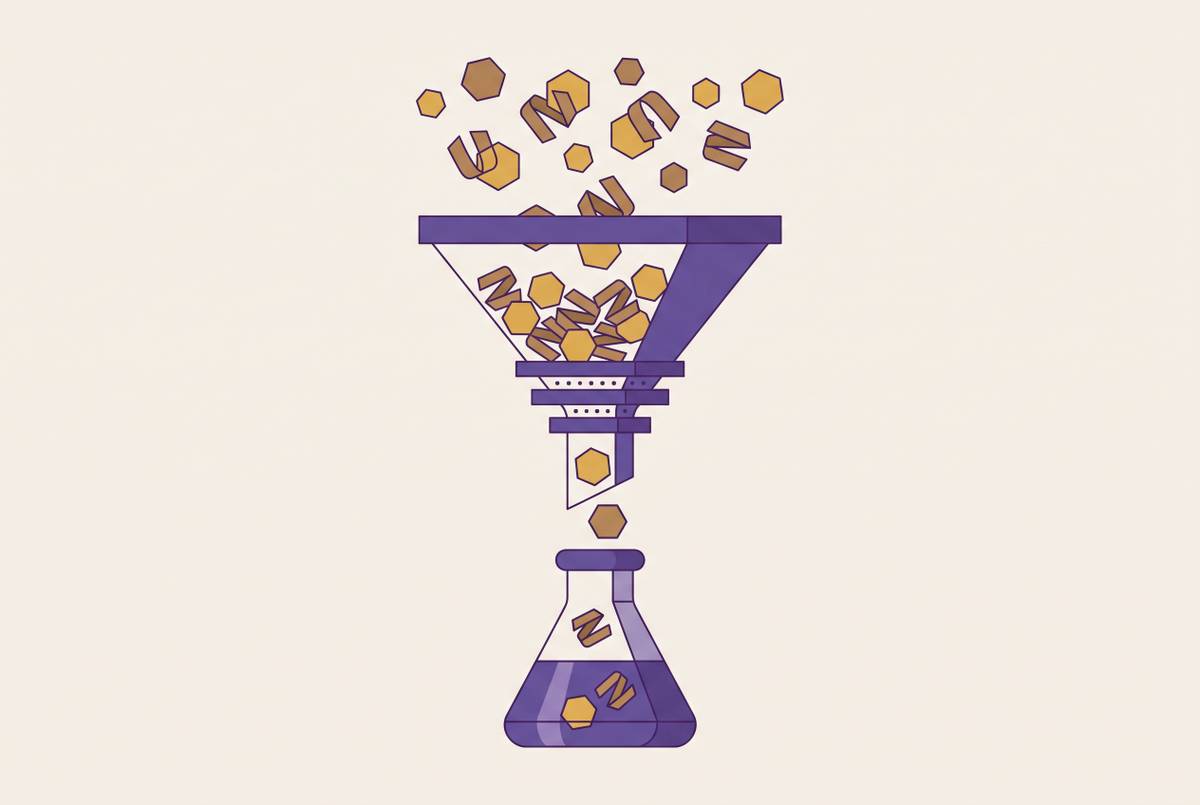
Early-stage screening against a large library is where LETs earn their keep. Speed of prep and the sheer number of variants a team can push through in a week determine how much of the sequence space gets covered in that time, since the goal is coverage of sequence space, not precision on one hit. Once a handful of promising variants clear that first pass, the calculus flips. Hit confirmation and optimization rounds favor plasmid, which is stable, reusable across repeated runs, and consistent from one reaction to the next, a property that matters once the question changes from "does this work at all" to "exactly how well, and does it hold up." At that point, a much smaller number of constructs justifies the three-day prep investment plasmids demand.
Scale-up and milligram-quantity production swing back toward plasmid for a related reason. Maxi-preps deliver large amounts of consistent template in a single batch, and this reproducibility ensures consistent results across many repeated reactions. Difficult proteins, toxic, unstable, insoluble, or built from domains that don't fold cooperatively, are the exception that favors LETs regardless of campaign stage, since there's no cell viability constraint to violate and no need to re-clone every time a structural variant needs testing.
Lysate choice and template choice aren't independent decisions either. E. coli lysate remains the cheapest option on the market, but it demands a deliberate LET protection strategy given how aggressively it degrades unprotected linear template, and that has to get decided at the outset, not patched in after a screen stalls. Automation pushes the same logic from a different angle: PCR products drop straight into plate-based, automated workflows, while plasmid prep resists parallelization once variant counts climb into the dozens or hundreds. The stage of the campaign should drive the choice, not some fixed property assigned to the template itself. Hybrid campaigns, LETs for discovery, plasmid for confirmation and scale-up, reflect how serious protein engineering groups actually structure this work.
Reagent system requirements determine whether the template strategy works.
Every strategy above assumes something about the lysate that a lab can't always verify: that its nuclease behavior is known, documented, and consistent batch to batch. That assumption fails more often than labs expect, and when it fails, everything built on top of it fails with it.
GamS performing well in E. coli lysate but underperforming substantially in V. natriegens lysate, as the ACS Synthetic Biology comparison showed, proves protection strategies don't transfer across systems by default. A lab working with a lysate whose formulation isn't disclosed has no way to diagnose why a strategy that worked last month stopped working this month. Lot-to-lot variability makes it worse: if nuclease load shifts between production batches, an inhibitor titration tuned for one lot can fail outright on the next, and without documentation, there's no way to tell whether the failure traces back to the inhibitor, the template, or the lysate.
Reproducible LET-based screening needs documented formulations and lot-level quality control data as a baseline, not a nice-to-have. A team can't troubleshoot a protection strategy against a reagent whose contents nobody discloses. Automation adds one more constraint: plate-based LET screens need a CFPS system that performs consistently at low reaction volumes across every well on the plate, which makes standardization a design requirement from the start rather than a fix applied later.
OpenCFPS from Sepia Biosciences is built around exactly this requirement set: openly documented formulations, published lot-level QC data, pricing structured to make high-throughput LET-based screening economically workable, and formats built for plate-based and automated workflows from the outset. The broader point holds no matter which reagent system a lab picks. A protection strategy is only as trustworthy as the lysate it runs in, and opacity or inconsistency at the reagent level quietly undoes whatever a carefully designed LET protection strategy was supposed to deliver. Reagent transparency and lot consistency belong on a lab's evaluation checklist as non-negotiable, sitting next to the technical protection strategy itself, not filed away as something to sort out later.
Sources
- Cell-Free Protein Synthesis - an overview | ScienceDirect Topics
- Eukaryotic cell-free protein synthesis: Chassis diversification, system engineering, and emerging applications - ScienceDirect
- Established and Emerging Methods for Protecting Linear DNA in Cell-Free Expression Systems
- 9528137
- High-Efficiency Protection of Linear DNA in Cell-Free Extracts from Escherichia coli and Vibrio natriegens | ACS Synthetic Biology | ACS Publications
- pubmed.ncbi.nlm.nih.gov
- pmc.ncbi.nlm.nih.gov
- Cell-Free Protein Synthesis from Exonuclease-Deficient Cellular Extracts Utilizing Linear DNA Templates - PubMed