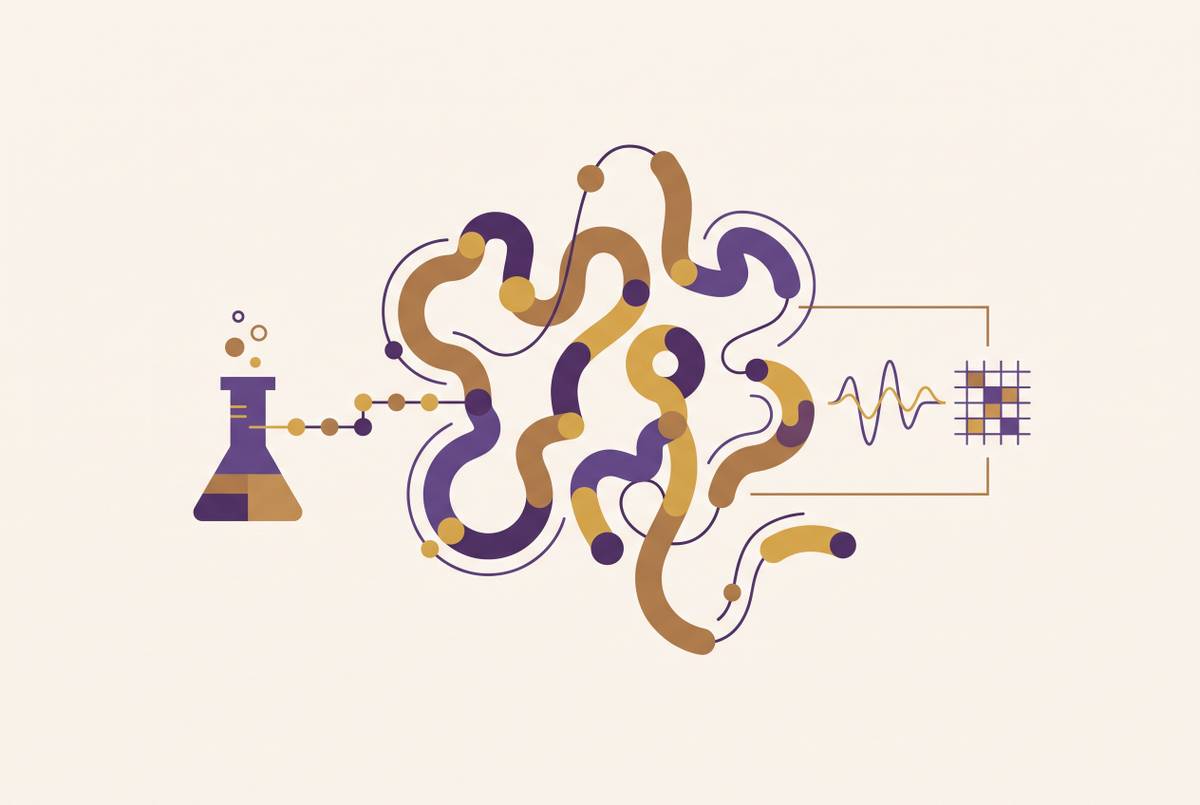
Toxic Protein Expression Using Cell-Free Systems
Cell-free systems let researchers produce toxic proteins without harming a living host.

Toxic and difficult-to-express proteins are a real and growing category of research targets, but conventional expression systems can't reliably handle them. Membrane proteins, toxic proteins, proteins prone to aggregation or misfolding, and those requiring specific post-translational modifications all fall into this category, and conventional expression systems struggle with them due to cellular stress responses, metabolic burden, or cellular environments that simply aren't compatible with what these proteins need to fold correctly. The failure mode at the center of this problem is structural: when a protein's function is to disrupt cellular processes, expressing it inside a living cell sets off the very harm it was built to cause. The host's translation machinery ends up delivering the very thing that destroys it, so yield suffers or the host dies before any useful protein accumulates.
Cytotoxicity is the headline cause, but it isn't the only one. Cellular quality control systems flag misfolded or aggregation-prone proteins, so these get routed toward degradation before they ever reach a usable state. Inclusion body formation, where overexpressed protein collapses into dense, insoluble aggregates inside the cell, compounds the issue for many of the same targets that are already cytotoxic. Metabolic burden adds a third layer: forcing a cell to divert its finite resources toward producing a protein that actively works against its survival strains the host's capacity long before expression levels reach anything scientifically useful. These three pressures, toxicity, misfolding, and metabolic strain, tend to arrive together in the same difficult targets. Membrane proteins and bacterial toxins have earned a reputation as some of the hardest molecules to produce through standard recombinant methods as a result.
None of this is a matter of technique needing refinement. A living cell is, by definition, a system organized around staying alive, and asking it to manufacture a molecule whose biological role is to kill or disable cells is a structural contradiction, not a protocol problem. You can optimize induction timing, lower growth temperatures, or swap expression strains, and these adjustments sometimes help a little. But the underlying conflict between the host's survival and the target protein's function doesn't go away with better technique. It persists for as long as the protein is being made inside something that the protein is capable of harming. Any viable solution has to address that condition directly, so the search for alternatives to cell-based expression has focused on removing the living host from the equation.
How cell-free protein synthesis sidesteps cytotoxicity by design
Cell-free protein synthesis, or CFPS, has become a versatile and powerful platform for producing toxic proteins because it replaces the living cell with a cell lysate, and you can't kill a lysate with what it produces. The extract is drawn from cells lysed before the reaction begins, but it retains everything needed for translation, protein folding, and energy metabolism. What the lysate lacks is any organism that can be harmed by the finished product. There's no cell left to disrupt and no viability to protect, so the toxic effects that would halt production in a living host have nowhere to land.
This isn't a matter of managing or tolerating cytotoxicity more effectively than living systems can. CFPS doesn't depend on cellular viability or metabolic regulation at all, so you get a level of control over reaction conditions that a living host can't offer. Because the system has fewer parts, synthesis goes faster, so you recover the target protein sooner once the reaction is complete. The constraint that defeats conventional expression, a cell's need to survive the protein being made inside it, is absent from the start rather than something to be worked around after the fact.
The open architecture of the cell-free reaction turns this absence into an advantage. Because there is no cell wall and no homeostasis to protect, supplements that affect protein concentration and folding can be added directly into the reaction mixture. You can add chaperone proteins, redox reagents, or folding catalysts at precisely the concentration needed, without worrying whether they can cross a membrane or disturb some other part of cellular physiology. In a living cell, every added compound has to first get past a barrier built to keep foreign material out. In a cell-free reaction, there is no barrier to negotiate.
Coupled transcription and translation systems extend this advantage further. Supplemented with an appropriate RNA polymerase, these systems can use DNA templates directly, including PCR products. A researcher can go from a DNA sequence to synthesized protein without cloning that sequence into a plasmid and without transforming it into a living host. If you remove the living cell, you no longer need the steps built around keeping it alive and getting DNA into it. CFPS doesn't just help you manage a toxic protein's effect on a host. It gives them a production system with no host to affect.
The landscape of CFPS platforms available for toxic protein work
No single CFPS platform handles every class of toxic protein equally well, so choosing the right extract source is the first practical decision a researcher has to make before a toxic protein project can get off the ground. The field has grown to include systems derived from several distinct sources, including E. coli, wheat germ, human cell extracts, and fully reconstituted systems, and that range has broadened both the accessibility and the applicability of CFPS across a wide span of research disciplines. Matching a target protein to the right platform depends on what that protein needs in order to fold and function correctly.
Prokaryotic extracts derived from E. coli are fast, inexpensive, and well-characterized, making them well suited to bacterial toxins and enzymes that don't require post-translational modification. Eukaryotic extracts built from CHO or Sf21 cells provide endogenous membrane environments, including microsomes, which allow for the synthesis of channel proteins and multi-subunit toxins that depend on eukaryotic folding machinery to assemble correctly. Wheat germ extract has an established track record with proteins that are sensitive to proteolytic degradation, offering a gentler environment for targets that would otherwise be chewed up before they could be isolated. Fully reconstituted PURE systems are built entirely from individually purified, defined components with no cell extract involved at all, so researchers get the highest level of control over what's actually present in the reaction, and that makes them well suited to mechanistic studies and to membrane protein integration using artificial lipid mimetics.
Among these options, the coupled transcription and translation method, working directly from DNA, held the largest share of the market in 2024. That position reflects a practical reality: combining transcription and translation into a single reaction streamlines the entire production process, and for most toxic protein work, that streamlining makes it the default starting point. Researchers working with a new or unfamiliar toxic target are more likely to begin with a coupled system and branch out toward a more specialized platform, such as a PURE system or a eukaryotic extract, only once the specific demands of that protein, whether that's a membrane environment, resistance to proteolysis, or a need for tightly controlled reaction composition, become clear. None of these platforms makes the others obsolete. Each addresses a different failure point that toxic and difficult-to-express proteins commonly run into, so you choose based on which failure point the target protein is most likely to hit.
Demonstrated production of functional toxic proteins in cell-free systems
Naturally occurring protein toxins come from bacteria, fungi, plants, and animal venom, and they're known chiefly for the damage they inflict on host cells. That destructive capacity, which is what makes them impossible to produce reliably inside a living host, is also what makes them valuable. Toxins have been put to medical use precisely because of their disruptive effects, not despite them, and that dual nature is what has driven sustained interest in finding a production method capable of handling them safely and at scale.
Cell-free systems have demonstrated the ability to produce these proteins in forms that are not just present in a reaction tube, but functionally active. This matters because detectable expression and functional activity are not the same achievement. A protein can be synthesized in measurable quantity and still fail to fold into a shape that performs its biological role, particularly for toxins wh
Sources
- Cell-Free Systems Enable the Production of AB5 Toxins for Diagnostic Applications
- Circumventing the Impossible: Cell-Free Synthesis of Protein Toxins for Medical and Diagnostic Applications
- Biotechnology Applications of Cell-Free Expression Systems - PMC
- Cell-Free Protein Synthesis - an overview
- A User’s Guide to Cell-Free Protein Synthesis
- Cell-free protein synthesis for producing ‘difficult-to-express’ proteins - ScienceDirect
- Cell-Free Systems and Their Importance in the Study of Membrane Proteins